
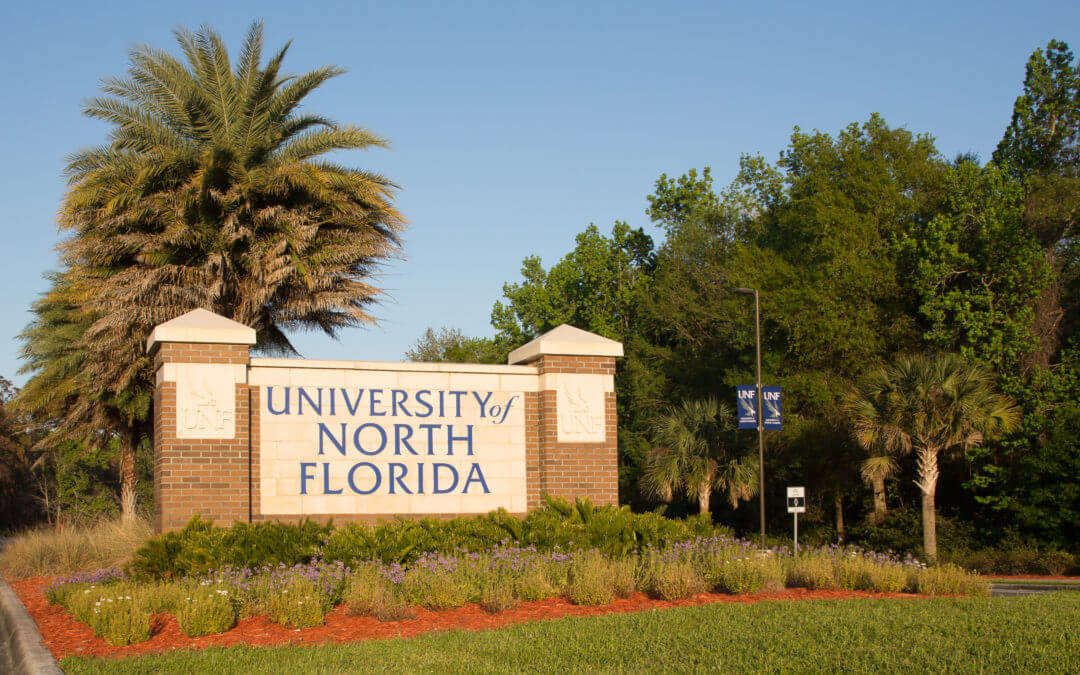
Incoming high-tech heat lab at UNF aims to protect athletes, workers (Courtesy of the Jacksonville Business Journal) — After Kelci Stringer’s husband, a Minnesota Vikings offensive lineman, passed away in 2001 from exertional heat stroke, she worked to develop a solution.
Nine years later, her efforts created the Korey Stringer Institute at the University of Connecticut — with support from the NFL, Gatorade and others — and now a new exercise laboratory will open at the University of North Florida in the New Year.
To-be called the Korey Stringer Institute at UNF, the university announced its partnership with KSI and weather safety platform Perry Weather to bring the lab to life.
“Jacksonville is an ideal location for our work due to the year-long heat and large target population of athletes ranging from youth to professionals, military and laborers,” said Douglas Casa, CEO of the KSI.
With a tie-in to the university’s athletics department and Brooks College of Health, the combined effort aims to bring a state-of-the-art heat exercise laboratory to UNF’s Hicks Hall, supporting student and faculty research, per a release.
Perry Weather will provide critical infrastructure for the lab, deploying heat monitoring instrumentation and software to deliver real-time environmental data that will support research initiatives, according to UNF.
Its technology will enable the institute to correlate environmental conditions with physiological responses and create evidence-based recommendations for athletes and laborers at high-risk for exertional heat stress.
The university has also hired on two faculty members for the institute, directly from the founding KSI site at the University of Connecticut: Dr. Michael Szymanski as director and Dr. Gabrielle Brewer as associate director.
“We’re incredibly proud to partner with the Korey Stringer Institute and the University of North Florida to help advance the science of heat safety,” said Perry Weather CEO Colin Perry in a statement. “This is an important investment in the future of athlete and worker safety, supporting critical research that will shape how schools and organizations nationwide combat heat stress.”