
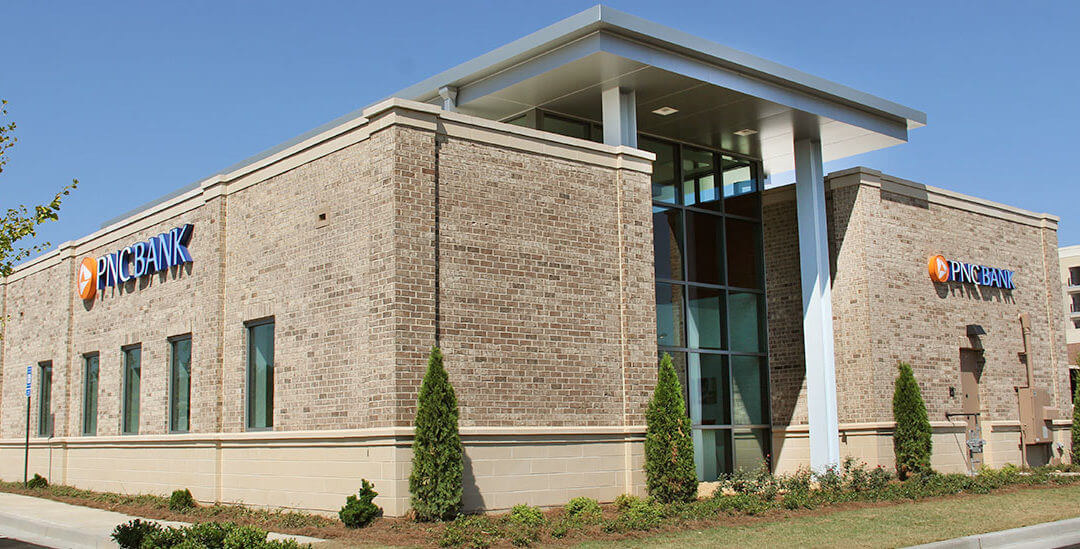
PNC Private Bank expands Jacksonville presence as wealth migration and corporate growth reshape market (Courtesy of the Jacksonville Business Journal) — For PNC Private Bank, Jacksonville is no longer just part of the Florida growth story.
It is one of the markets helping define it.
The private bank, which serves high-net-worth individuals, families and business owners, has continued to add talent and invest in North Florida as population growth, corporate relocations, business sales and wealth migration reshape the market.
“Florida keeps being a high priority for PNC in general,” said Lisa Simington, executive vice president and head of U.S. markets for PNC Private Bank. “As long as Florida continues to be a tax-favored state, people with wealth will continue to move to Florida, and it attracts businesses as a result.”
Simington, who is based in Tampa and previously led PNC’s Florida market, said Jacksonville has become a particularly important market for the private bank over the past three years. After putting a team on the ground following PNC’s acquisition of BBVA USA, the bank has focused on building its client base one relationship at a time.
The growth, she said, has been “pretty remarkable.”
“Specifically here in Jacksonville, over the past three years, we’ve been heavy on the talent acquisition side for our team,” Simington said. “The growth has been good, but the trajectory of what we expect over the next three to five years is pretty incredible.”
PNC recently chose Jacksonville for one of its private bank client events, a move Simington said reflected the market’s importance within the bank’s broader national footprint.
“We probably do a handful every year, so Jacksonville, out of one of our 100-plus offices, is a pretty big sign that this is a super market for us,” she said.
The expansion comes as Florida continues to attract both wealthy individuals and companies. In North Florida, Simington said, the opportunity is being fueled by two channels: individuals moving into the state and corporate growth that creates business-owner wealth.
“Individuals are retiring and coming in, but Jacksonville is also a significant market in Florida for corporate relocations,” Simington said. “When you have both channels being fueled by new residents coming into town, that is good for all banking business.”
That is especially true for a private bank tied closely to commercial relationships. Simington said many private bank clients come from PNC’s commercial and corporate banking clients, particularly when business owners sell or recapitalize their companies.
“A lot of our clients out of the private bank come from our commercial and corporate clients, where they monetize,” she said. “The fact that Jacksonville is a hotbed for large corporations has been super important for us.”
Simington pointed to projections showing metro Jacksonville’s population growing faster than both the U.S. and Florida overall in the coming years. That growth, combined with the region’s business diversity, has helped make the First Coast more competitive for financial firms, private bankers and clients.
That competition extends to talent.
“Everybody in our business wants to be in Florida,” Simington said. “It’s a super competitive market, not just for talent, but for clients.”
PNC is not alone in expanding in Florida and North Florida. Simington pointed to firms such as JPMorgan Chase and Pinnacle Financial Partners as examples of the competition for talent and clients in Jacksonville.
PNC recruits both locally and from outside the market. The bank also has a two-year analyst program and recruits from Florida universities, including the University of Florida, the University of North Florida, the University of South Florida and the University of Central Florida.
“We love the talent here,” she said. “There’s a lot of good homegrown Florida talent.”
While Florida’s tax climate and growth are part of the draw, Simington said PNC’s opportunity is increasingly tied to helping business owners connect their company finances with their personal wealth goals.
That was a key finding of PNC Private Bank’s inaugural Business Owner Wealth Insights report, which surveyed 300 private business owners and co-owners with annual revenue between $10 million and $125 million.
The report found that 89% of business owners surveyed want financial advice that considers both business and personal needs, while 67% manage business and personal finances separately. It also found that 88% value having a dedicated financial adviser who understands both sides of their financial life.
That disconnect, Simington said, creates a significant opportunity for both advisers and business owners.
“A lot of business owners have their personal and business finances disconnected,” she said. “They want it connected, but they’re so busy running their business that they don’t always have an opportunity to do that.”
For PNC, she said, the goal is to get in front of business owners years before a sale or transition.
“If we can get in front of a business owner five years before they think about selling, that sets us up really well to help them on the advice side,” Simington said. “The advice is the alpha in our business today, more so than the products we sell clients.”
The report reinforces that point. It found that 95% of surveyed business owners say financial advisers play some role in connecting business and personal finances, but only 55% use an adviser to manage both.
One of the biggest risks of waiting too long, Simington said, is missing planning opportunities before a transaction.
“If you don’t plan ahead of time before a sale, you can potentially lose millions of dollars on the tax side,” she said. “We do a lot of pre-sale planning consultation, helping business owners think about what kind of estate they need to set up and what kind of legal entities they can put in place.”
That planning needs to happen before an owner signs a letter of intent, she said.
“If they wait until they’ve signed a letter of intent or a deal, then it’s too late,” Simington said. “The IRS doesn’t recognize that. We have to get them before they get to that stage.”
Succession planning is another major issue for business owners, particularly in a state with a large number of closely held and family-owned companies.
PNC’s report found that 69% of all business owners agree planning for the future is important, but one in three have not formalized a succession or exit plan. Among family-owned businesses, 84% said a formal succession plan is critical for business continuity, while 83% said family dynamics affect business exit or succession plans.
The report identified the top barriers to succession planning as lack of a clear successor, focus on daily operations, family conflicts, complexity of the planning process, financial uncertainty and uncertainty about long-term business goals.
“The main barrier [to ownership succession] is not knowing all the money laws and tax rules for different ways to leave … giving in to a long plan in writing seems too much to handle,” one fourth-generation business owner said in the report.
Simington said she is seeing steady activity among owners selling or transitioning businesses, though not necessarily a sudden spike. In many cases, she said, the decision is tied to the owner’s stage of life, the company’s maturity or an opportunistic offer from a buyer.
“There’s still a lot of capital sitting on the sidelines with private equity,” she said. “They’re certainly out looking for those diamonds in the rough, and there are a lot of them in Florida.”
For some owners, a sale is also tied to philanthropic goals.
PNC’s report found that 81% of surveyed business owners say philanthropy is a core part of their business identity and legacy, while 70% have a strategic blueprint for charitable giving. The report also found that 80% believe the next generation should be involved in philanthropic efforts, but only 43% actively involve them today.
That creates another planning opportunity, Simington said, especially for wealthy families deciding how much wealth to pass to children and how much to direct elsewhere.
“You have some folks of significant wealth who want to transition it to their family members,” she said. “You have a lot who say their children should earn it on their own. Then you’re left with these big estates and what to do with them. Philanthropy plays a huge role for those clients.”
That dynamic is particularly relevant in Jacksonville, where philanthropy has long played a visible role in health care, education, civic projects and the nonprofit sector.
Tax planning remains another major topic. PNC’s report found that 77% of business owners are actively engaged in tax planning, 80% are extremely or very confident making tax-related decisions and 82% still say they would benefit from additional expert guidance.
In Florida, where there is no state income tax, Simington said the conversation often shifts toward business sale planning, estate planning, generational wealth transfer and philanthropy.
“For ultra-high-net-worth families, estate taxes still come into play,” she said. “We do a lot of conversations around generational planning, especially for families interested in having wealth move down through generations in the most tax-efficient way possible.”
Nationally, Simington said the macroeconomic picture remains favorable despite volatility around tariffs, artificial intelligence, global conflict, market concentration and other risks.
“What you have to look at is the fundamentals,” she said. “We look at corporate earnings and interest rate trends, and those are two key drivers. They’re both favorable right now.”
Still, she said, clients need to be prepared for volatility.
“All of those things create bumps in the road,” Simington said. “But as long as you have a fully allocated portfolio across all asset classes, you can weather the storm. We’re still favorable on the markets, really based on the fundamentals.”
For PNC, the longer-term bet is that Jacksonville will continue to grow in population, business activity and wealth.
“Jacksonville has all the right variables that attract employers like us and make us want to do business in this marketplace,” Simington said. “It currently is an important market, and the opportunity here continues to be immense for us.”